Most terpene explainers work through the same short list. Myrcene, limonene, caryophyllene, linalool, pinene. Terpinolene almost never makes the top of the page, and when it does it usually gets two sentences and a mention of nutmeg. That is a shame, because terpinolene is one of the more interesting compounds in the whole catalog, and it is responsible for an entire style of cannabis that people can pick out instantly without knowing why.
The terp that does not pick a lane
Terpinolene is a monoterpene, and its defining trait is that it refuses to be one thing. Smell it isolated and you get woody and piney notes sitting right next to bright citrus and a sweet floral edge, all at once, with none of them clearly winning. Most terpenes have an obvious headline. Limonene is citrus. Linalool is lavender. Terpinolene is four adjectives arguing.
That complexity is exactly why it is hard to notice in everyday life. It occurs in lilac, in some conifers, in apples, and in spices including cumin and nutmeg. It is also in tea tree oil, and from there it has found its way into a lot of soaps, lotions and household cleaners. But botanical sources usually carry it in small amounts, so it tends to get folded into a larger aroma rather than standing out on its own. You have smelled it many times. You have probably never smelled it alone.
Why haze smells like haze
In cannabis, terpinolene stops hiding.
It is the terpene most associated with haze and haze-descended cultivars, and it is frequently the dominant compound in them rather than a supporting one. This is unusual. Terpinolene is a comparatively rare lead terpene across cannabis as a whole, which makes the cultivars that do lead with it feel distinctly like a category of their own.
The classic reference point is Jack Herer, where terpinolene is reported to account for a very large share of the total aroma. Durban Poison and Trainwreck are commonly cited in the same breath. If you have ever noticed that a certain kind of flower smells sharp and sweet and vaguely like pine sap and lemon peel and something floral you cannot name, and that it smells nothing like the gassy dessert profiles dominating most menus, terpinolene is the reason.
It is also why those cultivars are so hard to describe accurately. Every attempt to summarize them into a single note loses most of the information.
The flavor problem terpinolene creates
Here is a technical wrinkle worth knowing if you care about how flavor gets built.
Simple terpene profiles are easy to pair with. If a strain reads as straightforward citrus, you reach for a fruit that complements citrus and you are most of the way there. Terpinolene-forward profiles do not offer that shortcut. Pair them with something sweet and the floral side gets cloying. Pair them with something tart and the piney side turns medicinal. There is a narrow window where all four of its directions stay legible at once, and finding it takes real work.
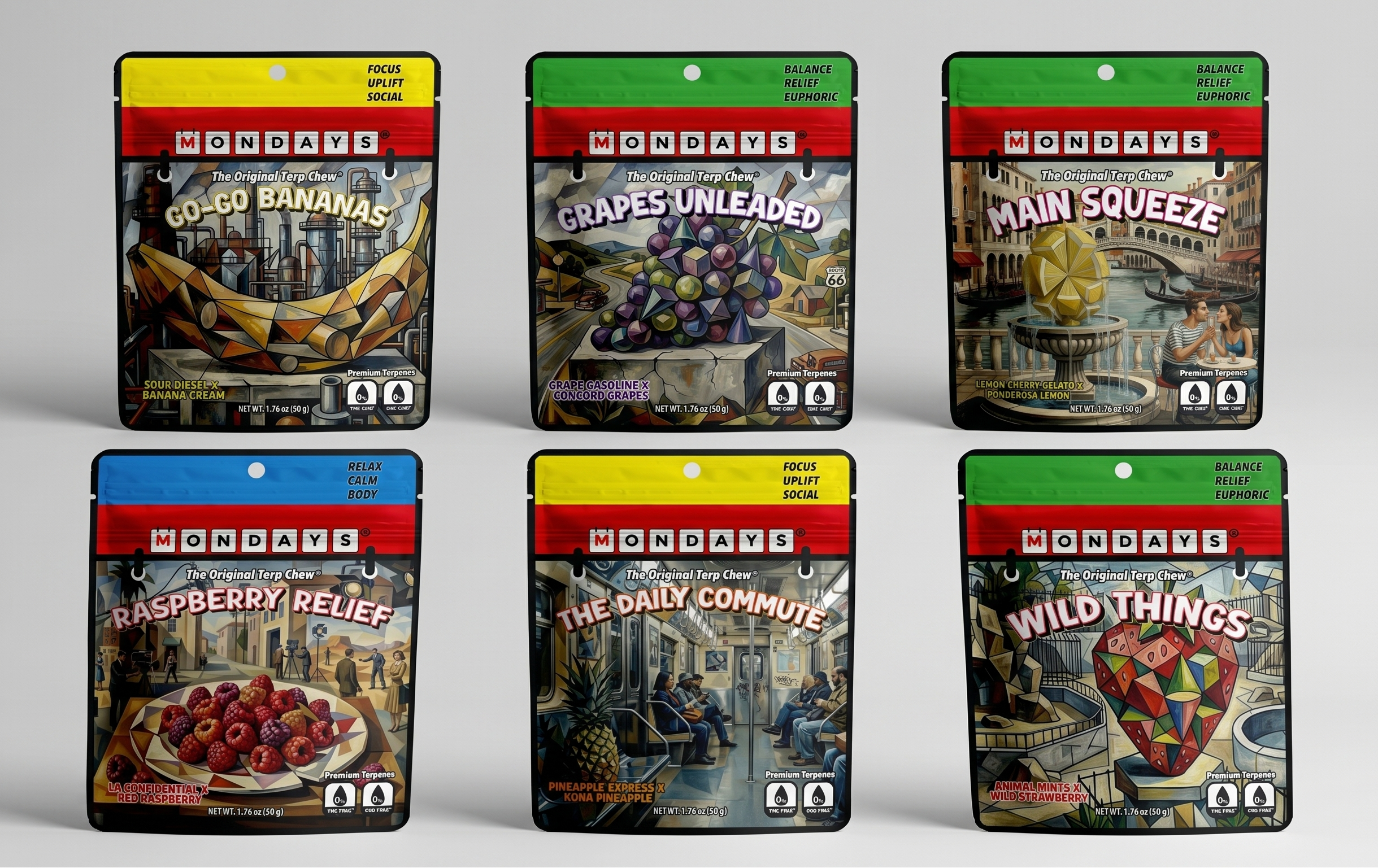
Our Jack Herer pairing is Jack Herer with Kona Pineapple, and pineapple was chosen precisely because it is not a simple flavor either. It brings tartness, sweetness and a slightly resinous tropical edge in one package, which gives each side of the terpinolene profile something to hold onto. We wrote about the whole matching process in How We Match a Taffy Flavor to a Strain if you want to see how that sausage gets made.
Those are botanical terpenes, which is worth stating plainly. Same compounds, sourced from plants other than cannabis, isolated and blended to match the strain's aromatic fingerprint. Every batch is tested by a DEA-registered lab.
Reputation, and where we stop
Terpinolene-dominant cultivars carry a Bright, Daytime reputation in cannabis culture. Haze strains have been described that way in shops and forums for decades, and the association is durable enough to be worth reporting as a cultural fact.
What we are not going to do is convert that into a claim. A cultural reputation attached to a plant that contains THC does not transfer to a THC-free chew, and pretending otherwise would be both dishonest and a claims problem. What does transfer is the aroma, which is the actual product.
The full terpinolene profile is in the library. If nothing else, next time you grate fresh nutmeg, take a second and pay attention to the sharp green thing sitting behind the warm spice. That is your introduction.