Some strains have a paper trail. Breeder interviews, seed catalogs, a release date you can point at. Animal Mints has none of that. What it has instead is a name that shows up on menus constantly, a flavor people can identify blindfolded, and a lineage that nobody can fully agree on. That combination is more common in cannabis than the confident strain charts online would suggest.
The part everyone agrees on
Animal Mints is credited to Seed Junky Genetics, the California breeding operation behind a long run of well-known cookie-family crosses. That much is consistent across sources.
After that, it gets murky. The most commonly reported lineage is Animal Cookies crossed with SinMint Cookies, which would make it a meeting of two heavyweight branches of the same family tree. Animal Cookies is itself reported as Girl Scout Cookies crossed with Fire OG. SinMint Cookies is reported as the Forum cut of GSC crossed with Blue Power. Follow both lines back and you land on Girl Scout Cookies twice, which explains a lot about how the thing tastes.
But a second version circulates just as widely, listing the parents as Animal Cookies, GSC and Blue Power directly. Seed Junky has never published a definitive account, so strain databases hedge, and the honest ones say so. We are going to do the same. Treat the lineage above as reported rather than documented, because that is what it is.
Why the mystery is normal, not suspicious
It is tempting to read missing paperwork as a red flag. It usually is not. For most of the period when these crosses were being made, cannabis breeding happened in a legal grey zone where writing things down was a liability rather than an asset. Cuts moved hand to hand. Names got reused. A clone that traveled three states could pick up a new name and lose its history along the way.
The result is an industry where the flavor is verifiable and the paperwork is not. Which is one of the reasons we lean on chemistry instead of pedigree. A terpene panel does not care who your parents were. We got into this in Indica vs Sativa Is Dead. Meet Chemotypes. and it applies here perfectly.
What it actually smells like
This is where Animal Mints stops being ambiguous and gets very specific.
The signature is cool and sweet up front, with an unmistakable mint-adjacent lift that gives the strain its name. Underneath that sits the cookie-family base: doughy, faintly vanilla, a little nutty, with an earthy weight that keeps it from floating off. There is often a sharp gassy note threaded through the back end, inherited from the OG side of the family. It is a complicated profile that somehow still reads as one clear idea, which is not easy to pull off.
People describe it as tasting expensive. That is not a chemical property. It is what happens when a sweet profile has enough earthy structure underneath it to feel finished rather than sugary.
How we got it into a chew
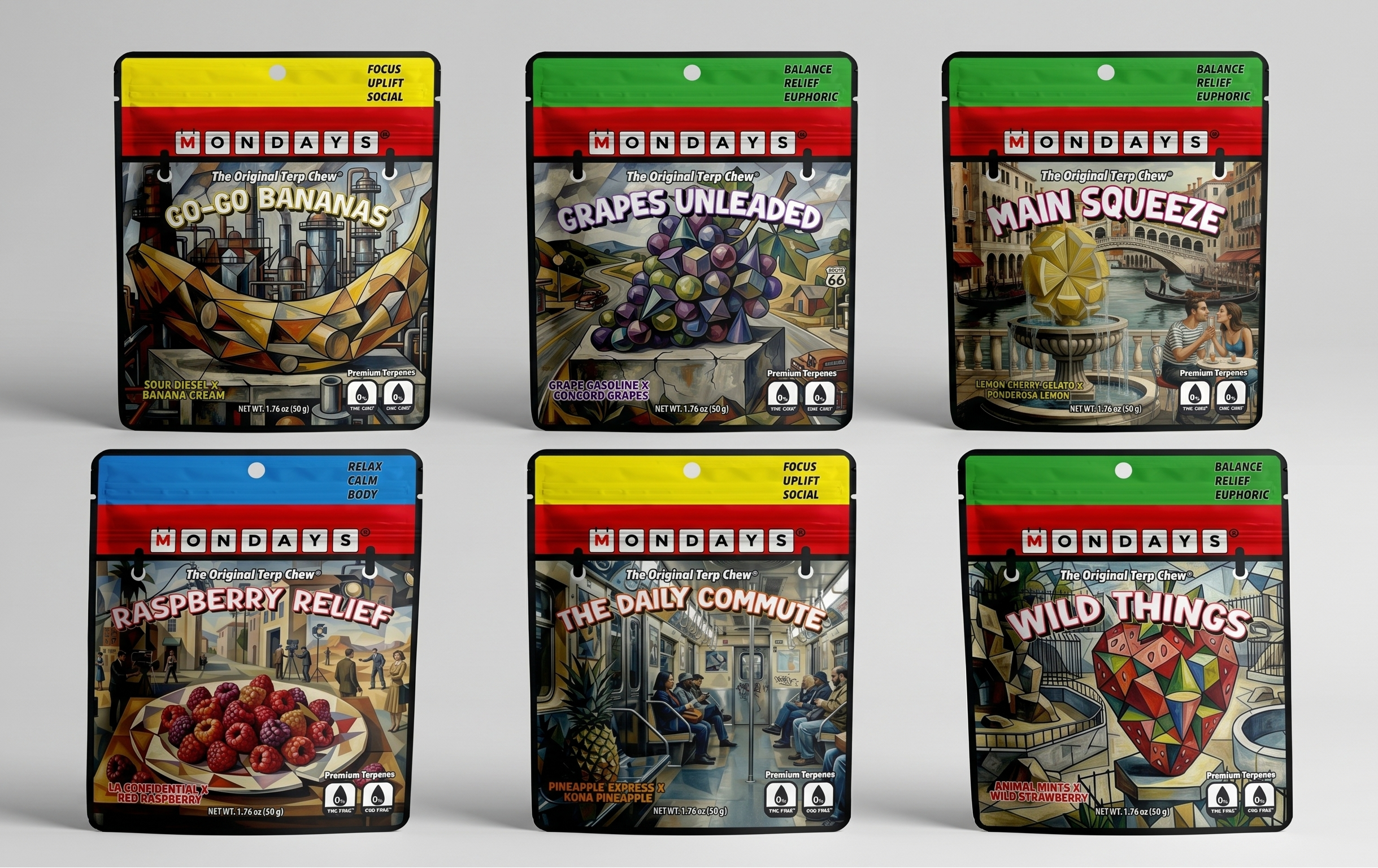
Animal Mints is the terpene profile behind Wild Things, where we paired it with wild strawberry. The logic was contrast. That cool, doughy, slightly earthy base wanted something bright and a little tart across the top, and a sun-ripened strawberry note does that job without burying anything underneath it.
Every one of these is The Original Terp Chew®, which means the strain character comes from the terpenes and nothing else. No THC, no CBD, no intoxicating cannabinoids. Tested by a DEA-registered lab, batch by batch, and the reports are public. What you are tasting is the aromatic signature of the strain, isolated from everything cannabis is usually sold for.
In cannabis culture Animal Mints has a Cozy reputation, the kind of name that comes up when people are describing a slow evening rather than a busy afternoon. That is a cultural association, built by a lot of people describing their experiences in similar words over a lot of years. It is worth knowing as context. It is not a claim about what a chew will do, and we are not going to dress it up as one.
Worth knowing
The lesson of Animal Mints is that a strain's identity lives in its aroma, not its ancestry. Two people can disagree about the parents and still recognize the same jar from across a room. That is the part we can actually reproduce, and that is the part we chase.
The full Animal Mints profile is in the library, and the strain library has the rest of the roster if you want to keep going.
See you next Monday.