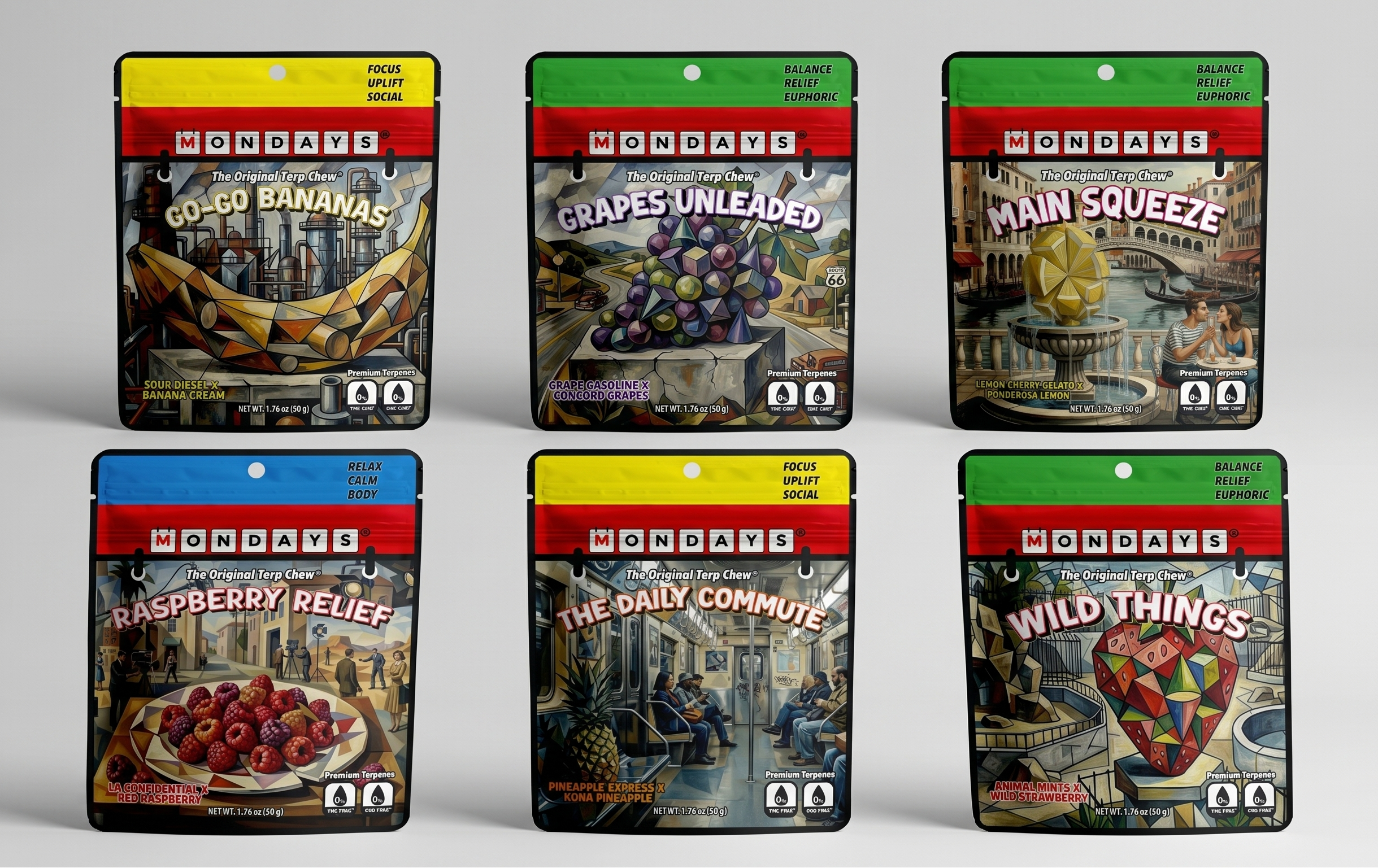
Lab tested might be the least informative phrase in this entire industry. It appears on packaging constantly and it can mean anything from a full accredited panel on every production run to one sample somebody sent out in 2023 and has been pointing at ever since.
So here is a plain breakdown of the words you see on testing claims, which ones carry real weight, and which ones are decoration.
DEA-registered is about permission, not quality
You will see this on our packaging and on plenty of other people's, so it is worth being precise about it.
A DEA registration lets a laboratory legally handle controlled substances in order to analyze them. That is genuinely useful in this category, because to tell you reliably how much of a given cannabinoid is or is not in something, a lab has to be allowed to possess reference standards of the thing it is looking for. A lab without that registration is working around a hole in its own toolkit.
What DEA registration is not: an endorsement, an inspection of the product, or any statement about whether the lab is competent. It is a registration to handle regulated material. Anyone implying it means the government has reviewed and approved their candy is stretching it well past breaking.
The accreditation that actually tells you something
The number that does speak to competence is the accreditation. Ours reads PJLA 120090, which refers to Perry Johnson Laboratory Accreditation, one of the bodies that accredits testing labs against ISO/IEC 17025.
ISO/IEC 17025 is the international standard for whether a testing laboratory knows what it is doing. It covers method validation, equipment calibration, staff competence, sample handling, and whether results are traceable and reproducible. An accredited lab has had an outside assessor come in and verify all of that, and gets reassessed on a cycle rather than once forever.
If you are comparing two products and one cites an accreditation body and number while the other just says lab tested, that difference is the whole signal.
What is actually on the panel
A testing panel worth the name is several separate tests reported together. For an edible, the ones to look for are:
- Cannabinoid analysis. Which cannabinoids are present and at what levels. On our botanical line the point of this test is confirming absence rather than measuring content, since those products are made with zero hemp and zero cannabis extract.
- Heavy metals. Lead, arsenic, cadmium, mercury. These accumulate from soil and equipment and they are the single best argument for testing anything plant-derived.
- Pesticides. A long screen, and one of the more common places products quietly fail.
- Residual solvents. Leftovers from extraction, where extraction was involved.
- Microbials and mycotoxins. Yeast, mold, the usual bacterial screens, and the toxins mold leaves behind. Standard food-safety territory.
A candy should be clearing a full food-safety panel, not just a cannabinoid number. Potency testing alone tells you nothing about whether the thing is clean.
Batch numbers are the whole game
This is the part most people skip and it matters more than anything above.
A certificate of analysis covers one batch. Not the recipe, not the brand, not the product line. One production run. So a COA with no batch identifier on it, or one you cannot match to the code printed on the bag in your hand, is a document about somebody else's candy.
Ours carry batch codes and recipe codes, and every batch gets its own panel rather than inheriting a previous one. Tested by a DEA-registered lab means tested each run, which is the only version of that sentence that means anything.
How to check for yourself
Find the batch code on your bag, then pull the matching document from our certificates of analysis page. If the codes do not line up, you are looking at the wrong file.
Reading one is less intimidating than it looks once you know which four things to check first, which is exactly what our guide to reading a COA without a chemistry degree walks through. There is also a broader overview of how our testing program is set up.
And if you want to run the batch-matching exercise across several profiles at once, the Hemp Variety Box gives you six bags and therefore several codes to go check, which is a more useful way to learn this than reading about it.