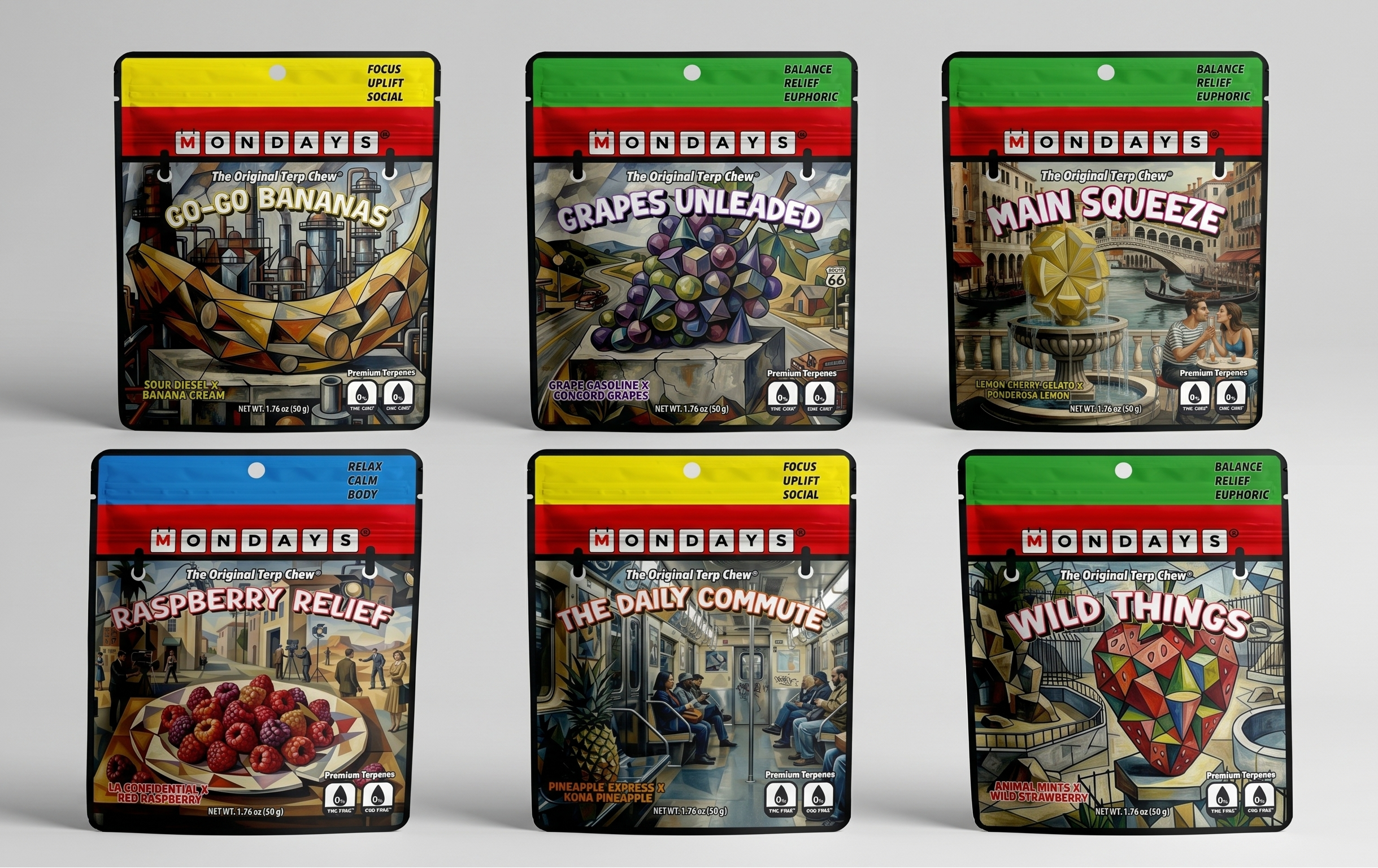
People lump them together constantly: terpenes and CBD, the two famous not-THC parts of cannabis. They are not cousins. They are not even the same kind of molecule. Here is the clean breakdown.
Different compound families
CBD is a cannabinoid, the same chemical family as THC, produced almost exclusively by the cannabis plant and studied for how it interacts with the body's endocannabinoid system. Terpenes are aromatic compounds from a completely different branch of plant chemistry, made by nearly every plant on earth: the limonene in citrus, the linalool in lavender, the pinene in a forest. Cannabis makes both families at once, which is why they get tangled in conversation.
Different jobs
CBD is consumed for its properties as a cannabinoid; it has no meaningful flavor or aroma of its own. Terpenes are the opposite: they ARE the flavor and aroma. Every note you smell in a strain, the gas, the citrus, the cake, is terpenes talking. When people say a strain has personality, they are describing its terpene profile whether they know it or not.
Different legal futures
Here is where 2026 makes the distinction very practical. The federal hemp law effective November 12 caps finished hemp products at 0.4 mg total THC per container, and because full-spectrum CBD products carry trace THC by design, industry groups estimate most of the CBD market fails that test. Terpenes are not cannabinoids and not THC, so a terpene product with a non-detect cannabinoid panel is simply outside the law's scope. Full details in our explainer.
Which one is a terp chew built on
Terpenes, entirely. A MONDAYS chew contains zero THC and zero CBD, all cannabinoids non-detect on the COA. What you get is the part of cannabis you can taste, with none of the parts a lab can flag. Our terpenes vs CBD page keeps the evergreen comparison, and the Terpene Library introduces the flavor side compound by compound.