Status update, August 28, 2026. The date below is in motion, so here is where things actually stand.
Section 781 is real, enacted law. It was signed on November 12, 2025 and it set a one-year clock, which is where the November 12, 2026 date comes from. That part has not changed.
What has changed is that Congress is trying to move the clock. On August 8 the Senate passed a stopgap funding bill 90 to 6 that would push most of the hemp restrictions back to December 11, 2026. An amendment to strip that delay out and keep the November date was set aside 61 to 32.
Here is the important part. That delay is not law yet. The House has not passed the Senate's version, and nothing has been signed. The House returns in September, and the hemp language could still come out. So November 12 remains the date on the books until something replaces it.
There is also a split worth knowing about. The proposed delay covers naturally occurring cannabinoids. Cannabinoids that a cannabis plant cannot produce on its own, the synthesized ones, were carved out and would lose federal hemp status on the original November 12 date either way. If the delay passes, there are two deadlines, not one.
One more open piece: the FDA was supposed to publish a list of covered cannabinoids and define what counts as a "container" for the per-container limit. It has not done either, and it missed its deadline. Until that lands, some of the practical detail here stays genuinely unsettled.
We will keep this post current as it moves. Nothing about MONDAYS changes in any of these scenarios, since our chews contain no THC and no CBD to begin with. We are writing about this because you asked, not because we are worried.
Welcome to Terp School. First class is the one everyone is nervous about: the new federal hemp law. If you have seen the words "hemp ban 2026" pop up in your feed and felt your stomach drop, pull up a chair. We are going to walk through what the law actually does, who it actually affects, and what it means for the chews you buy from us. Plain language, no panic, no legalese.
Quick note before we spark this up: this is our plain-language read as a brand that lives and breathes this stuff. It is not legal advice. If you run a hemp business, talk to a real attorney.
The short version
On November 12, 2025, President Trump signed Public Law 119-37. Tucked inside was Section 781, a provision that rewrites the federal definition of hemp. It takes effect November 12, 2026. When it does, the standard for what counts as legal hemp gets a lot stricter, and a huge chunk of the products currently on shelves will no longer qualify.
Here is the punchline for MONDAYS shoppers: both of our lines already clear the new bar with room to spare. More on that below. First, the law.
What actually changed
The old rule came from the 2018 Farm Bill. It said hemp was legal as long as it contained no more than 0.3% delta-9 THC by dry weight. That single word, delta-9, was the loophole. Companies loaded products with other forms of THC (delta-8, delta-10, THCA) that were not named in the rule, and technically stayed under the delta-9 line.
Section 781 closes that door two ways, per the Congressional Research Service and the statute text at 7 U.S.C. 1639o:
- Total THC replaces delta-9 THC. The new standard counts all the THC together, including THCA (the acid form that converts to THC when heated). The math regulators use is total THC = delta-9 + (0.877 x THCA), measured against the same 0.3% dry weight line. THCA flower, which was the whole "legal weed" workaround, does not survive this.
- A 0.4 mg total THC cap per container. This is the big one, and the part most coverage glosses over. Any finished hemp product intended to be eaten, drunk, inhaled, or applied can contain no more than 0.4 milligrams of total THC in the entire container. Not per serving. The whole package. "Container" means the innermost packaging that touches the product, like the bag, bottle, or box.
The law also throws out cannabinoids that cannot be made naturally by the plant or that were synthesized outside it. That is aimed squarely at lab-made stuff like delta-8 converted from CBD, HHC, and THC-O. Industrial hemp (rope, seed, fiber, grain) is carved out and stays fine.
Who this actually hits
To be blunt, almost everything in the current hemp-derived intoxicant aisle:
- Delta-8 and delta-10 products. Gummies, vapes, tinctures. Most are synthesized from CBD, which is now excluded twice over.
- Hemp delta-9 edibles and beverages. A 10 mg hemp THC gummy is roughly 25 times the new per-container cliff, and the cap covers the whole package, not one piece.
- THCA flower. Once total THC is measured, it reads like marijuana.
- Most full-spectrum CBD. This surprises people. Full-spectrum products carry trace THC by design, and across a 30-count bottle those traces usually blow past 0.4 mg total.
This is where the number you keep seeing comes from. The U.S. Hemp Roundtable, the industry's main advocacy group, estimates the cap would encompass about 95% of the hemp extract industry. Their General Counsel, Jonathan Miller, told NPR on February 18, 2026 that the cap "would encompass 95% of the hemp extract industry, 95% products. Even the vast majority of nonintoxicating CBD products have more than 0.4 milligrams of THC per container." Worth saying plainly: that 95% is an industry estimate from a group fighting the law, not a government count. But it lines up with what the math does to a normal full-spectrum bottle, so we take it seriously.
Products that no longer meet the definition do not just get pulled from shelves. They fall back under the Controlled Substances Act as marijuana. That is a big deal for a lot of brands.
The timeline, and what is still up in the air
The effective date is November 12, 2026. As of this writing in July 2026, that date is still standing. A handful of bills to delay or repeal Section 781 have been introduced (the Hemp Planting Predictability Act, which would push the effective date to November 2028, and the American Hemp Protection Act, which would repeal it outright), but none has passed. The House passed its 2026 Farm Bill, H.R. 7567, by a 224-200 vote on April 30, 2026 without delaying the ban. President Trump also signed Executive Order 14370, "Increasing Medical Marijuana and Cannabidiol Research," on December 18, 2025, directing his staff to work with Congress to update the definition so people can keep getting "appropriate full-spectrum CBD products." An executive order is a request, though, not a repeal, and it did not change the law.
One more open thread: the FDA was required to publish, by February 10, 2026, a list of every cannabinoid it knows to occur naturally in cannabis, a THC-class list, and a "similar effects" list, and to spell out exactly what counts as a "container." It missed that deadline. The Congressional Research Service noted in May 2026 that the guidance still had not been published, and in March 2026 the FDA sent a separate CBD compliance and enforcement policy to the White House budget office for review. Translation: some details are genuinely unsettled, and anyone who tells you they have it all figured out is guessing. Our read is simple. Plan for the law as written, because the deadline is real whether or not the paperwork catches up.
What to check on any COA
Whatever brand you buy, the lab report (the COA, short for Certificate of Analysis) is where the truth lives. Here is the quick checklist:
- Total THC, not just delta-9. The new rule cares about the sum. Look for a total THC figure that accounts for THCA.
- Per-container math. Multiply per-serving THC by the number of servings. That is the number the 0.4 mg cap applies to.
- The full cannabinoid panel. Delta-8, delta-10, HHC, and friends should all be accounted for, ideally non-detect if the brand claims zero.
- A batch number that matches your product. A COA for a different batch is not a COA for what is in your hand.
- The lab. Independent, and ideally DEA-registered. Anonymous PDFs are a red flag.
If a product page has no COA at all, treat that as your answer.
Why MONDAYS sails through
Here is the part we are proud of. MONDAYS was built on terpenes, not THC. And terpenes are not cannabinoids at all.
Terpenes are the aromatic compounds that give every strain its smell and personality: the citrus in a limonene-forward cultivar, the pine, the gas, the funk. They show up in hops, lavender, and citrus peel too. Section 781 regulates THC and cannabinoids. Terpenes are neither. If THC is the gas pedal, terpenes are the steering wheel: they shape the character of a strain experience without being the intoxicating engine.
We run two lines, and both are already under the new sub-0.4 mg standard, not because we reformulated in a panic but because they were never built on cannabinoids in the first place:
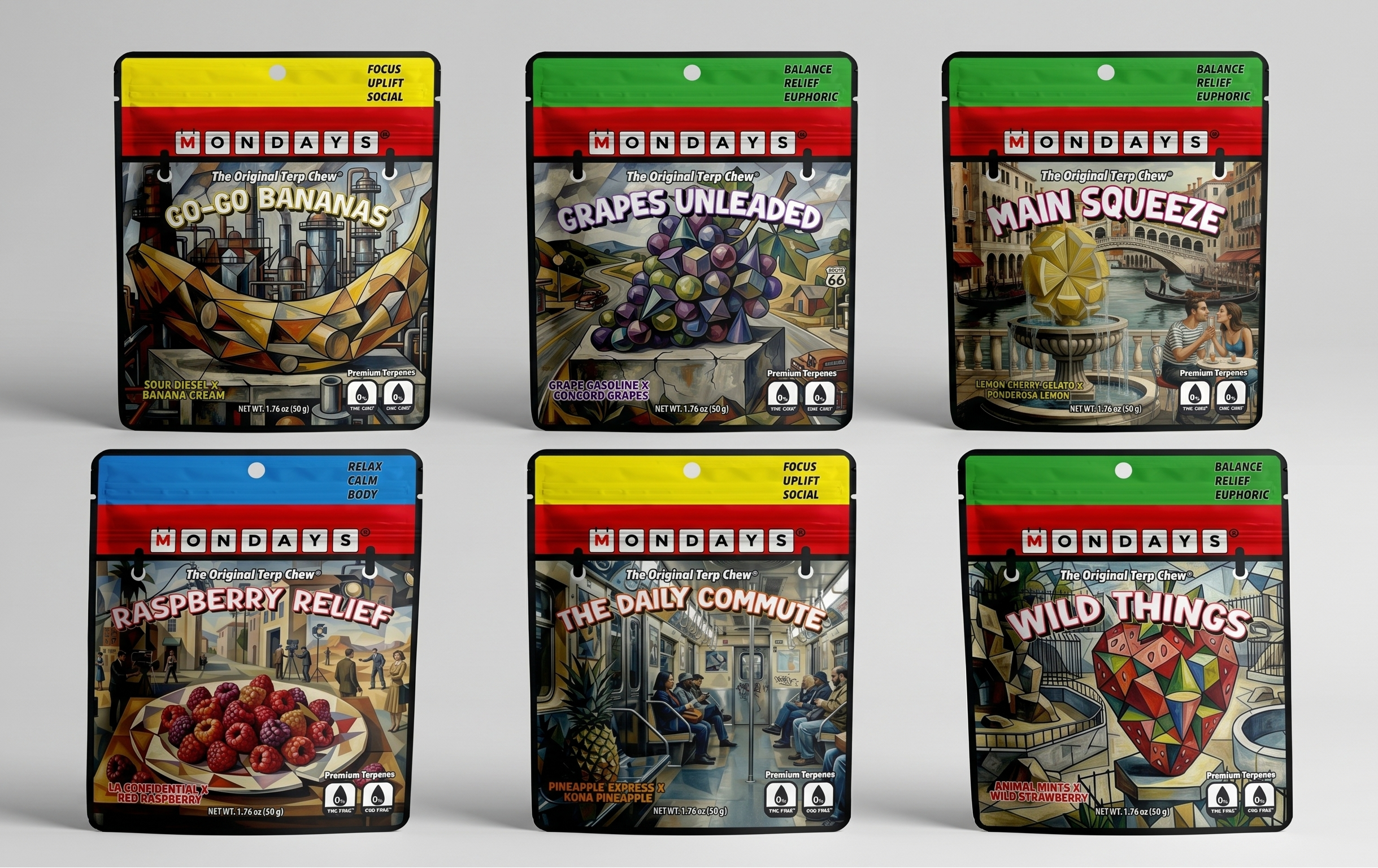
- Hemp chews. Hemp-derived terpenes, zero THC, zero CBD, all cannabinoids non-detect. We verify it batch by batch with COAs from Delta 9 Analytical, a DEA-registered lab.
- Botanical chews. Plant-derived terpenes with no hemp ingredient at all. Nothing in them is touched by a hemp law in the first place.
Because our chews carry no THC and no cannabinoids to measure, the 0.4 mg per-container cap is a bar we do not even approach. While an estimated 95% of the hemp extract market scrambles to reformulate before November, per the U.S. Hemp Roundtable's own estimate, we are already on the right side of the line. That is not luck. It is the whole idea behind The Original Terp Chew.
Want to see the receipts? Our lab results live at our COA page. Every batch, every panel.
FAQ
What is the new hemp law 2026?
It is Section 781 of Public Law 119-37, signed November 12, 2025 and effective November 12, 2026. It redefines federal hemp using a total THC standard and caps finished products at 0.4 mg of total THC per container. Products over the line get treated as marijuana under federal law.
What does 0.4 mg THC per container mean?
It means the entire package, not one serving, can hold no more than 0.4 milligrams of total THC. A 30-count gummy bottle counts as one container, so all 30 gummies added together have to stay under 0.4 mg. That is why so many products do not make it.
Is delta 8 legal after November 2026?
For most delta-8 products, no. Delta-8 is usually synthesized from CBD, and the law excludes cannabinoids that are synthesized or manufactured outside the plant. Once the rule takes effect, those products lose federal hemp protection. State rules vary, so check where you live.
Are my gummies legal after the hemp law?
Depends entirely on the gummy. If it contains delta-8, delta-9, or THCA, or is a full-spectrum CBD gummy with trace THC, it very likely exceeds the 0.4 mg per-container cap. THC-free options, and terpene-based chews like ours, are a different story. Read the COA and do the per-container math.
Is this a total hemp ban?
No. Industrial hemp and genuinely THC-free products are not banned. What the law targets is the intoxicating hemp category and most products with measurable THC. Calling it a blanket "hemp ban" oversimplifies it, but for the intoxicant aisle the effect is close to that.
Are terpene products affected?
Terpenes are not cannabinoids and not THC, so a product built purely on terpenes with all cannabinoids non-detect is not implicated by the 0.4 mg cap. That is exactly how MONDAYS chews are made.
Where to go next
New to the whole terp thing? Start with our buyer's guide, or learn the basics at what do terpenes do. Ready to pick a strain? Browse them all at every strain we carry, or take the strain quiz and let us match you. And if you just want proof, the lab results are always at our COA page.
Class dismissed. See you next Monday.