Wine people have a method. Coffee people have a method, a scoring sheet, and strong opinions about the sheet. Whiskey people have a method and a specific glass they will tell you about. Candy people put the candy in their mouth.
Which is fine. That is what candy is for. But if you went out of your way to buy something built to taste like a specific strain, it seems a waste to send the first one down while scrolling. So here is the method. It takes about five minutes and there is nothing to spit out.
One. Smell the bag before you read the bag
Open it and get your nose over the opening while the air is still concentrated in there. Do it before you look at the flavor name, because if you read the words first you will find them. That is not tasting, that is suggestion, and it is the single most common way people talk themselves out of their own palate.
Take two short sniffs rather than one long one. Your nose adapts fast, and the first half second is the most information you are going to get.
Two. The first ten seconds are lying to you
Put one chew in and do not chew it yet. The front of your tongue is going to report sugar and acid, loudly, and that is nearly all it has to say. Sweetness and tartness arrive first in almost every candy ever made, which is why so many people conclude that all fruit candy tastes the same. They are only listening to the opening statement.
Let it sit for a count of ten. Notice how little is actually happening yet.
Three. The middle is where the strain lives
Now chew, slowly, and breathe out through your nose while you do it.
That last instruction is the whole trick. Most of what you call taste is smell, happening at the back of your nasal cavity while you eat. Aroma compounds come off the food in your mouth, travel up the back of your throat, and hit your olfactory receptors from behind. Tongue gives you sweet, sour, salt, bitter and savory. Everything else, every note you would describe with an actual word, is arriving through your nose from the inside.
This is the part of the experience where a strain profile shows up, because strain character is terpenes and terpenes are aroma. Breathe out through your nose and you get the pine, the earth, the spice, the fuel, the citrus rind. Breathe only through your mouth and you get sugar. Same chew, two completely different reports.
Four. Name the finish
After you swallow, wait. Something stays behind for ten or fifteen seconds, and it is usually not the same thing that led. Fruit-forward flavors often finish herbal or resinous underneath, because the fruit is the fast part and the strain side is the slow part.
Ask one question: what is still here? That is your finish, and it is the most useful thing you will learn about any given flavor.
Five. Write down one word
One. Not a paragraph. Just the single closest word you have, even if it is a bad word. Dusty. Jammy. Green. Sharp. Creamy. Peel.
Do this four or five times across different flavors and a pattern shows up fast, and the pattern is more useful than any label on any bag. If you want a vocabulary to borrow from rather than inventing your own from scratch, work through the terpene wheel, and our walkthrough of how to use one has the three-step version that keeps you from freezing up in front of eighty words at once.
How to run an actual flight
Three flavors is the right number. Four is pushing it and five is a blur.
Go lightest to heaviest, which in practice means fruit-and-citrus first and earth-or-dessert last, because a heavy profile will flatten everything you taste after it. Plain water between each one, no coffee, no mint gum beforehand. Whole chew each time, since biting one in half changes how fast the aroma comes off.
Then, and only then, read the bags and see how close you got.
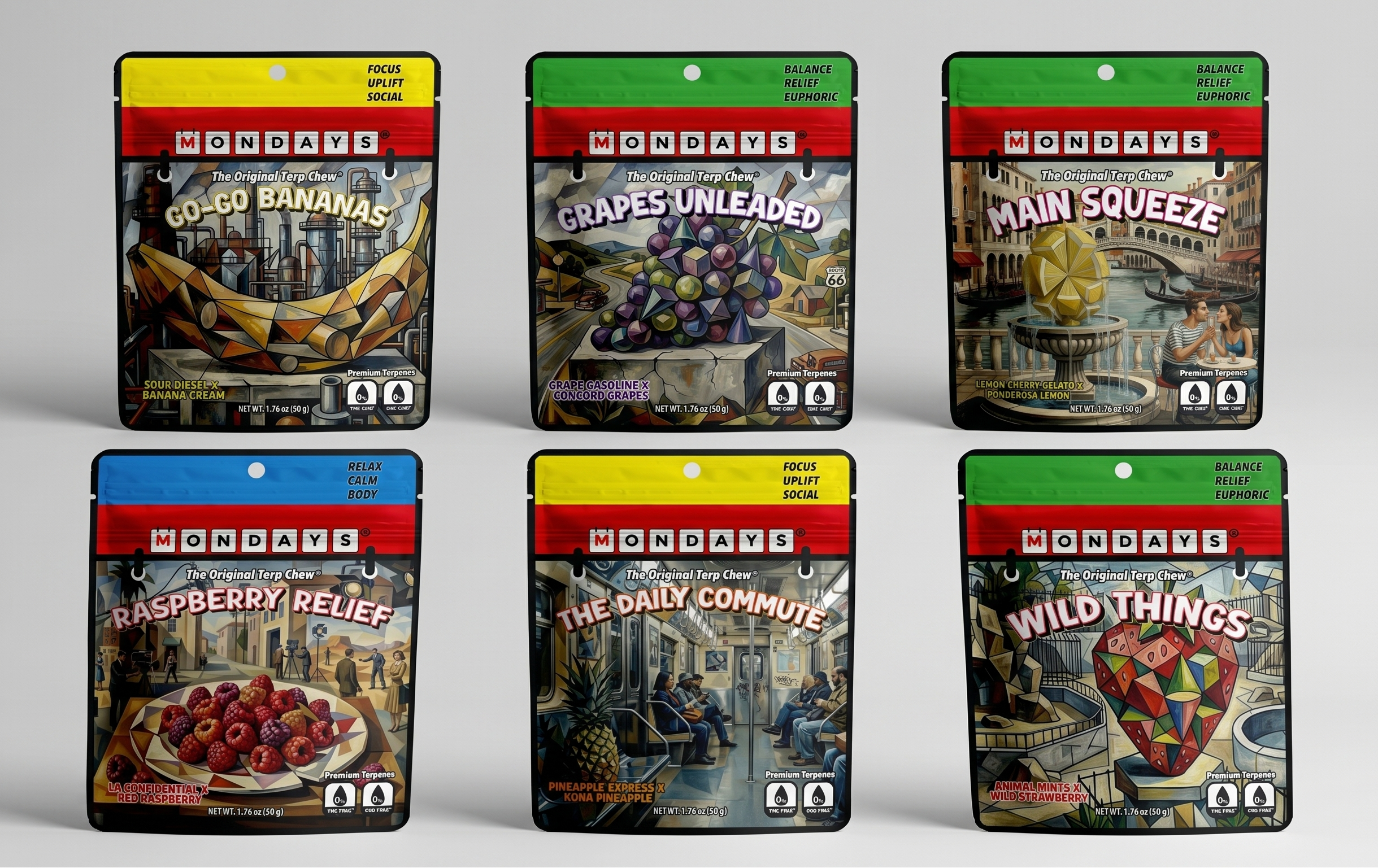
If you want a flight already assembled, the Botanical Variety Pack is three profiles across six bags, and the Hemp Variety Box runs the whole hemp lineup so you can taste the range in one sitting. Every batch of The Original Terp Chew® is tested by a DEA-registered lab, so what you are tasting is documented rather than implied.
And if you would rather skip the coursework and get pointed straight at something, the quiz asks about flavors you already reach for and works backward from there.