Here is a thing that frustrates people the first time it happens. You find a cultivar you love, you write the name down, you buy it again three months later from a different shop, and it is not the same. Not ruined, not fake, just different. Brighter, or flatter, or somehow more peppery than you remember.
Nobody swapped anything on you. Terpene profiles are not fixed properties of a strain name. Genetics set the range of what is possible, and then roughly a dozen other things decide where inside that range any particular jar lands.
The menu is enormous
Start with scale. More than 150 different terpenes have been identified in cannabis resin, alongside roughly 100 cannabinoids. No single plant expresses all of them in meaningful quantity, and a typical lab panel reports somewhere between ten and twenty five of them, which is already a lot of dials.
Now consider that those dials are not independent. Terpenes share biosynthetic precursors, so the plant is working from a common pool of raw material. Geranyl pyrophosphate, for instance, is an intermediate on the way to both myrcene and ocimene. Push resources one direction and the other direction gets less. A profile is a budget, not a list.
Same seeds, different plant
The clearest demonstration of this in the literature is a comparison of commercial cannabis grown indoors versus outdoors. Researchers ran two cultivars through both environments and found that the outdoor samples carried a noticeably greater share of sesquiterpenes, the heavier ones, including beta-caryophyllene, alpha-humulene, alpha-bergamotene, alpha-guaiene and germacrene B.
The finding that should stop you, though, is narrower. In one of the two cultivars, the indoor-grown samples completely lacked beta-myrcene. Not reduced. Absent. And beta-myrcene is the terpene that tops more lab reports than any other, the one we called the quiet default of the whole category in our myrcene post.
Same genetics. One environment produced the most common terpene in cannabis. The other produced none of it.
Where the rest of the variance comes from
Environment is only the first stage. After harvest the profile keeps moving, and drying and curing change it through four separate mechanisms.
Evaporation. The light stuff leaves. Freshly harvested cannabis carries a higher concentration of monoterpenes than the same material does after it has dried, which is the entire reason fresh-frozen exists as a category.
Decomposition. Some terpenes break down into other compounds rather than simply departing.
Conversion. Oxidation and enzymatic activity turn one molecule into another. Geraniol oxidizes to citral. Under acidic conditions it goes to alpha-terpineol instead. The atoms stay in the room and change costume.
Development. This is the counterintuitive one. Curing can raise certain terpene levels rather than lower them, which is why a careful cure is a craft step and not just storage. Done well, total concentration goes up and the profile gets rounder. Done badly, you can strip a profile to almost nothing.
Even the anatomy of the plant biases the outcome. The stalked trichomes concentrated on flowers produce large amounts of monoterpenes and cannabinoids, while the sessile trichomes produce a much higher share of sesquiterpenes. How a plant is trimmed and which material ends up in the bag shifts the ratio before anyone opens a jar.
What to do with this
Three things, and the first is the hardest.
Stop shopping by strain name alone. The name tells you the genetics and the lineage and the story, all of which are real and worth knowing. It does not tell you what is in the jar. That is what a terpene profile is for.
Read the batch, not the brand. A certificate of analysis is batch-specific for exactly this reason. Two jars with the same label and different batch numbers are two different measurements, and both can be accurate. We walked through how to read one in the COA post, and every one of ours is posted on our certificates page.
Trust your nose over the category. If a jar smells different from the last one, it probably is different, and you are not imagining it. Your nose is a better instrument than the label.
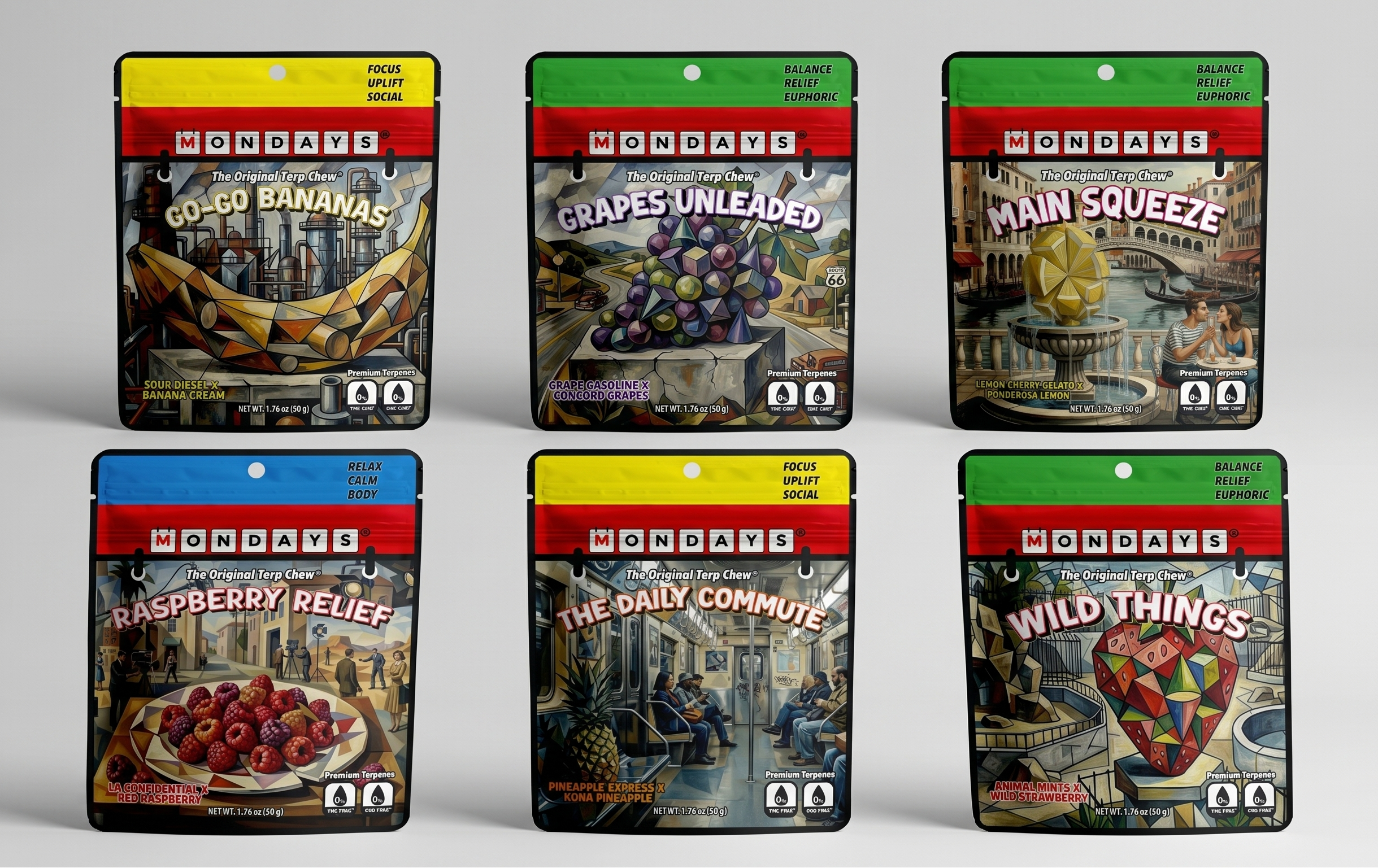
The candy side of this is a different problem with a different answer. When we build a flavor we are not harvesting anything, we are composing to a target, which means a profile we ship in January tastes like the same profile in June. That consistency is the one advantage a manufactured flavor has over a plant, and it is the reason every batch of The Original Terp Chew® goes to a DEA-registered lab before it goes anywhere else.
Plants are allowed to have moods. Candy is not.
See you next Monday.