In 1984, a sensory chemist at UC Davis named Ann C. Noble got tired of listening to wine people describe wine. The vocabulary in use at the time ran heavily toward words like elegant, masculine, and complex, none of which tell you anything about what is in the glass. So she built a wheel.
The Wine Aroma Wheel put broad categories at the center and worked outward toward specifics, and it did something that decades of florid tasting notes had failed to do. It gave two strangers a shared vocabulary. If you said blackcurrant and I said blackcurrant, we were now talking about the same thing.
Coffee copied it. Beer copied it. Whiskey copied it. Cannabis copied it too, and that is where the terpene wheel comes from.
How the wheel is built
Every version differs in the details, but the architecture is always the same. Three rings, working outward from general to specific.
The inner ring holds the broad families. Citrus. Pine. Earth. Floral. Spice. Fuel. Sweet or dessert. These are the buckets almost anyone can sort into on a first sniff, with no training at all.
The middle ring splits each family into its neighborhoods. Citrus opens into lemon, orange, grapefruit. Earth opens into soil, moss, mushroom, hay. Sweet opens into vanilla, berry, cream.
The outer ring gets specific enough to be useful. Not just lemon but lemon zest rather than lemon juice. Not just earth but wet forest floor rather than dry dust. This is where you finally land on a phrase that actually describes the thing in front of you.
And underneath all of it sits the chemistry, because most of those categories map back onto compounds you can name and measure. Citrus tends to mean limonene. Pine tends to mean pinene. That woody, hoppy dryness tends to mean humulene. The wheel is a sensory map sitting on top of a chemical one, and the two line up more often than you would expect. You can walk the chemical side of it in our terpene library.
How to actually use one
Most people stare at a wheel, feel vaguely tested, and put it down. Here is the method that fixes that.
One. Smell before you look. Get the aroma first, with the wheel face down. If you read the words first, you will find them, because that is how suggestion works.
Two. Start at the center and commit. Pick one inner-ring family. Just one. Is this broadly citrus, or broadly earth, or broadly sweet? You are allowed to be wrong. The commitment is the exercise.
Three. Walk outward one ring at a time. Citrus. Okay, which citrus? Orange. Okay, which orange? Peel, not juice. Now you have a description that would mean something to another person, and you got there in three moves instead of by staring at eighty words at once.
That is the whole technique. It works on cannabis, on coffee, on a glass of wine, and on a piece of candy. Our terpene wheel page has a version you can work through at your own pace.
Why this beats the old categories
The reason the wheel matters is that it describes something real. Indica and sativa describe plant structure and a lot of marketing inertia, and they have never reliably predicted what a given jar smells or tastes like. We went after that at length in the chemotypes post.
Aroma, on the other hand, is right there. You can check it yourself in two seconds without trusting anybody's label. And once you can name what you are smelling, you can start noticing that the profiles you keep coming back to have something in common, which is the entire point of learning what a terpene profile is in the first place.
Try it on something you already have
You do not need cannabis to practice. Your kitchen is full of single-note training material. Black pepper, dried bay, fresh basil, a lemon, a sprig of rosemary. Smell each one on purpose and put it on the wheel. Fifteen minutes of that will do more for your palate than a year of reading menu descriptions.
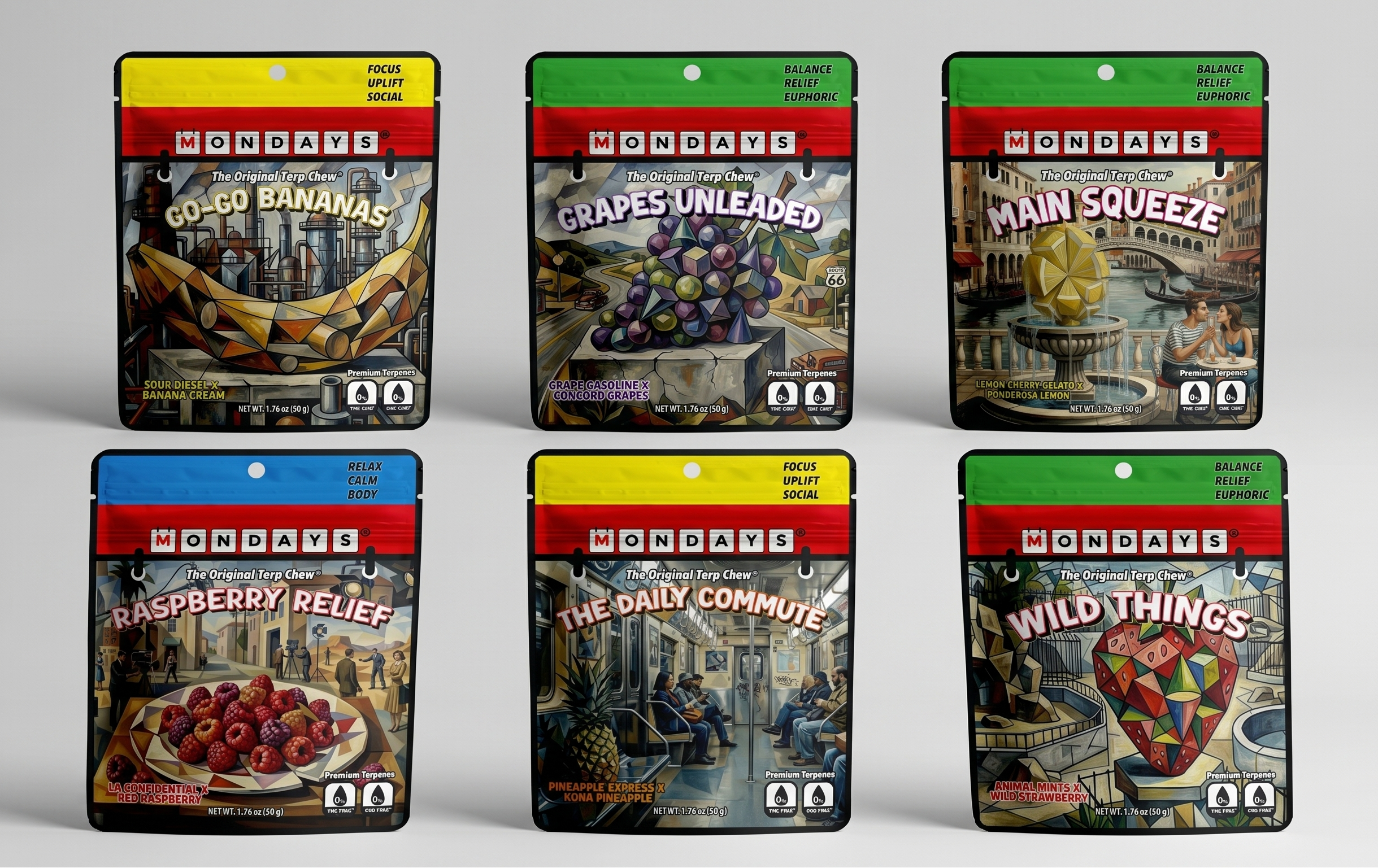
Then come back and try it on a chew. Every flavor we build starts as a position on this wheel before it is anything else, and every batch of The Original Terp Chew® is tested by a DEA-registered lab. If you would rather skip the homework and get pointed somewhere, the quiz asks about flavors you already like and works backward from there.
See you next Monday.